A resilient, educational, and
biodiverse museum landscape
The Field Museum of Natural History Landscape Master Plan + Phased Implementation
| Location | Chicago, Illinois |
| Client | The Field Museum of Natural History |
| Expertise | Horticulture & Arboriculture, Resilience & Sustainability, Master Planning & Visioning, Stewardship & Continuing Landscape Consulting |
| Size | 23 acres |
| Completion | Master Plan: 2016, South Terrace: 2019, North Terraces: 2022 |
Bringing Research into the Landscape
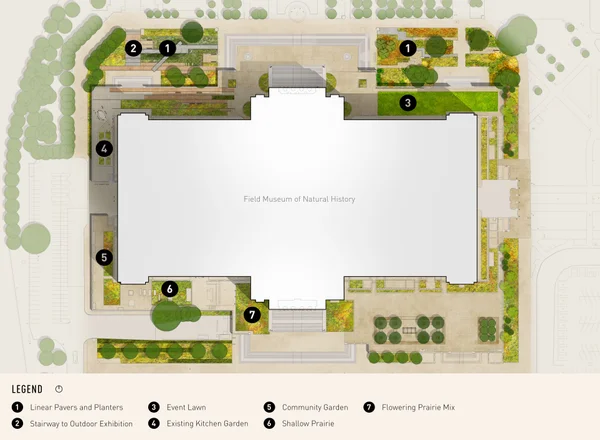

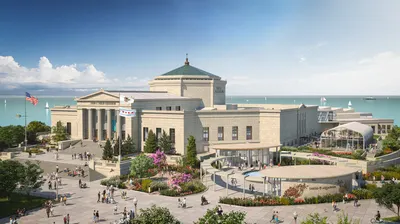
Working closely with museum staff, we developed a landscape master plan that reimagines the 23-acre campus as part of a broader ecological network. The plan fosters growing community awareness of ecological processes, sustainable practices, and landscape restoration, while positioning the site as a critical link within the larger systems that shape the Museum Campus and Chicago’s lakefront. By demonstrating regenerative design at a highly visible civic site, the project sets a precedent for sustainable landscape design and management at both campus and regional scales.
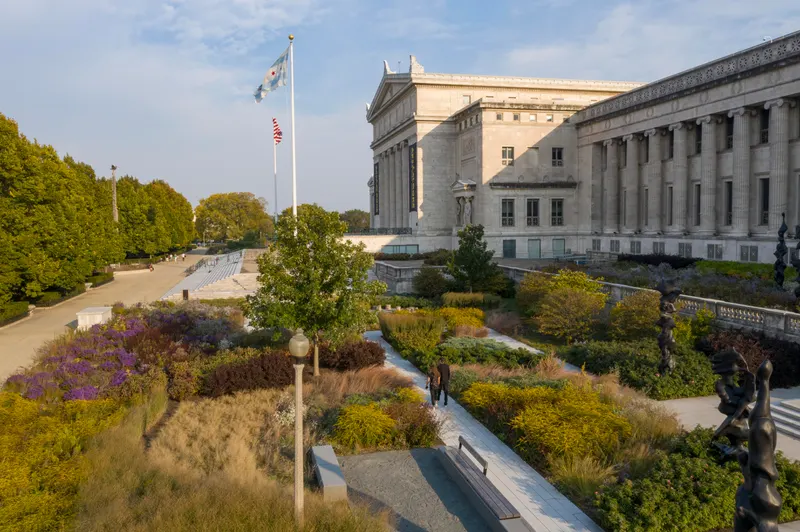
The Master Plan organizes the site into eight interconnected landscapes: the Field Museum Terrace – comprising four separate terraces – and four adjacent areas partially or wholly owned by the Chicago Park District. While each landscape responds to specific programmatic needs and ownership conditions, all contribute to a unified ecological vision. Phased implementation allowed the project to advance strategically over time. The four terraces have since been realized and are collectively known as the Rice Native Gardens.
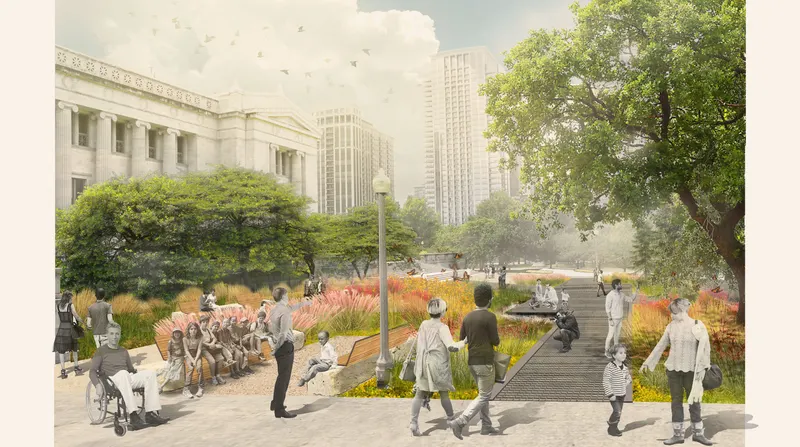
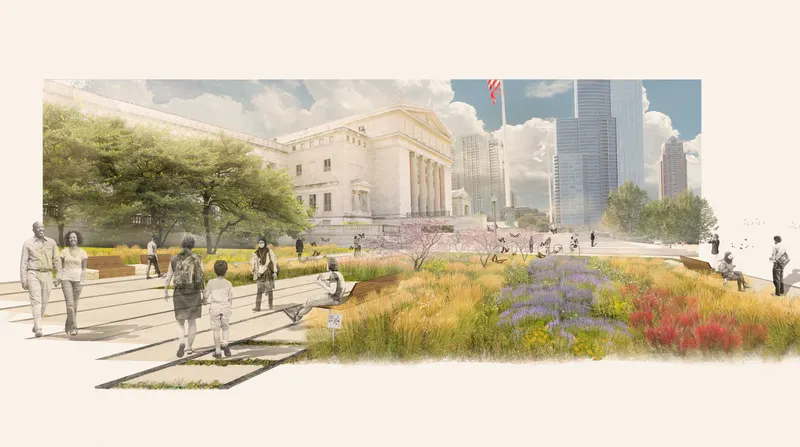
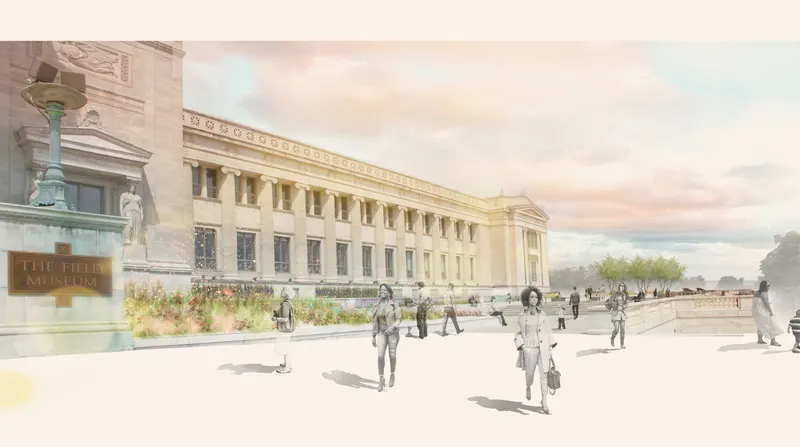
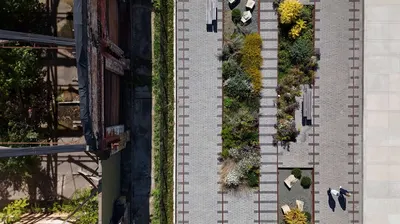
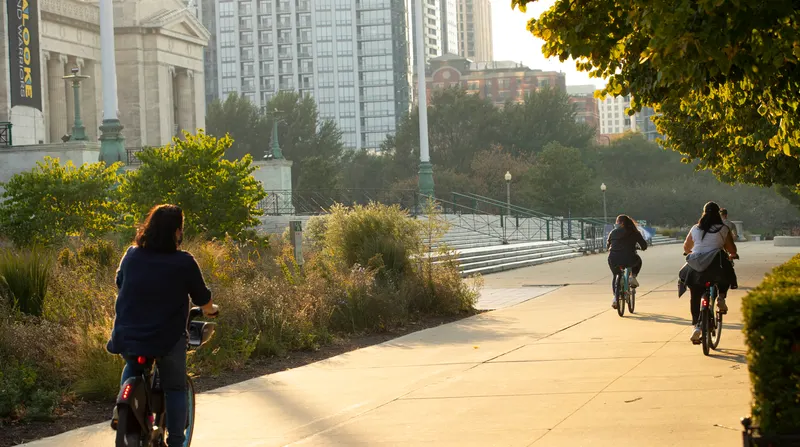
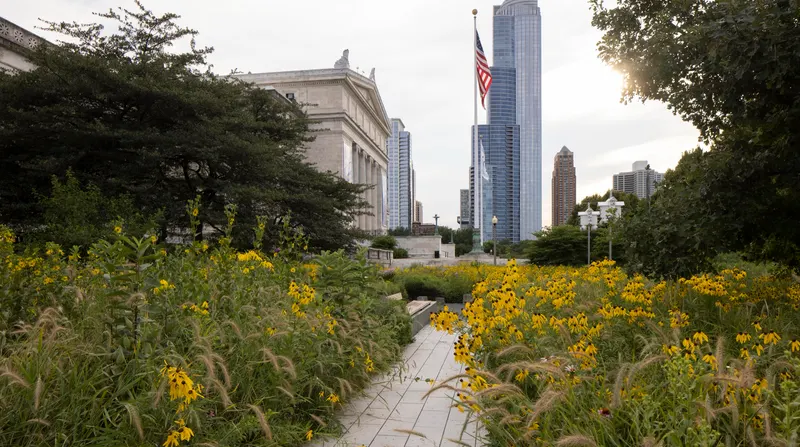
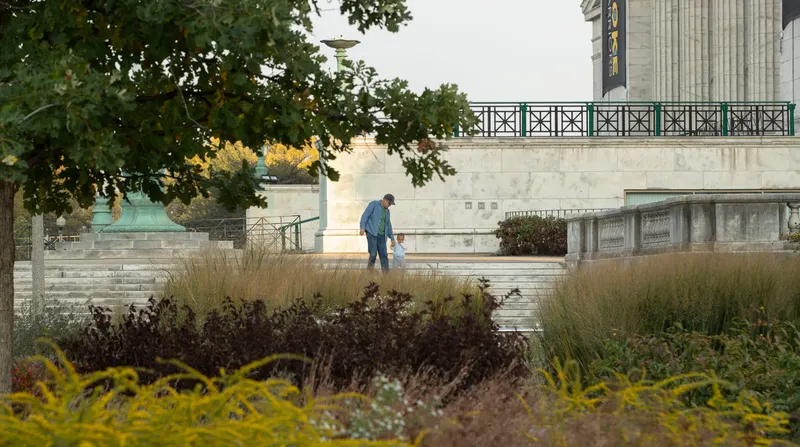
Once dominated by turf and monoculture foundation planting, the site is now a vibrant destination showcasing diverse native Illinois species that connect outdoor landscapes with indoor exhibits. The gardens reinterpret regional habitats while linking to existing plant community corridors along the lakefront and in nearby Grant Park. Interpretive signage, accessible pathways, and seating areas transform the grounds into an outdoor classroom, supporting informal gathering, structured programming, and self-guided learning.


Environmental performance guided every design decision. Replacing turf with bioswales, rain gardens, and other stormwater best management practices eliminated runoff from the grounds while creating habitat for native wetland species. Native planting systems dramatically reduced potable water use, requiring irrigation only during establishment and periods of extreme drought. Tallgrass plantings and wet swale ecologies mitigate the urban heat island effect through shading, evapotranspiration, and soil moisture retention, helping to moderate temperatures across the campus.
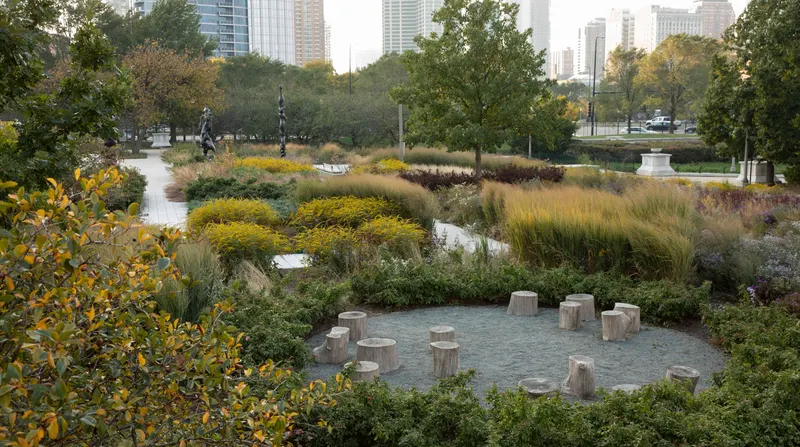
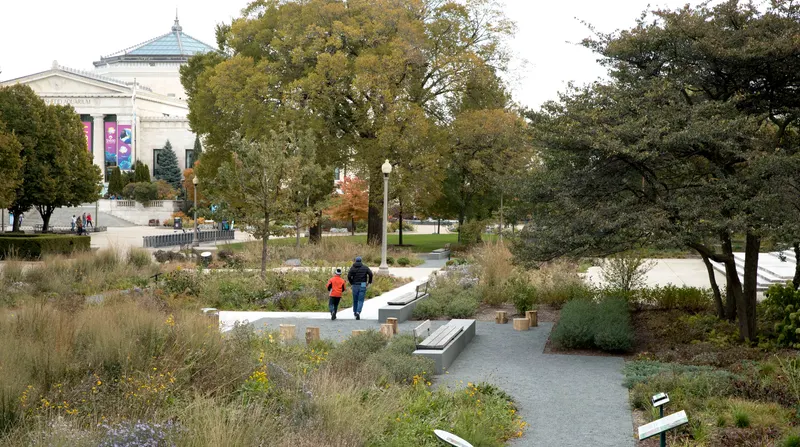
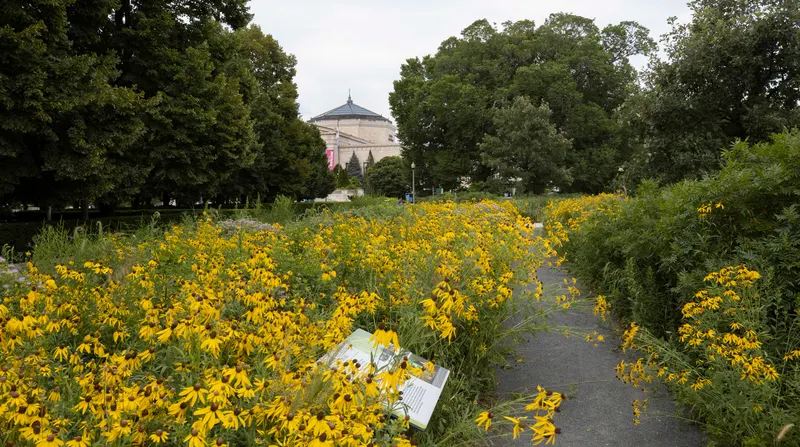

Field Museum ecologists continue to steward the gardens as a living laboratory, advancing research, promoting biodiversity, and studying relationships among flora, fauna, and human communities. Seasonal waves of pollinators animate the landscape; in summer, the hum of insects often rises above the sounds of the surrounding city.
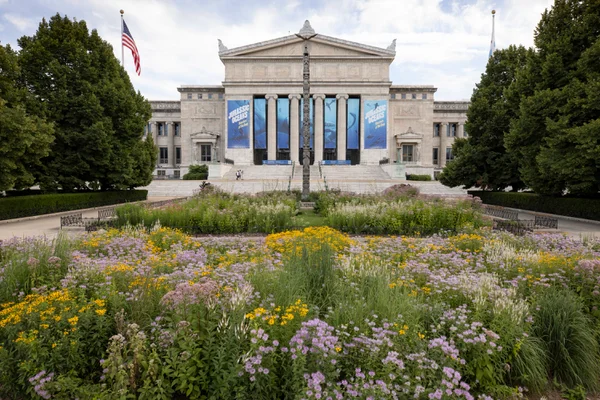
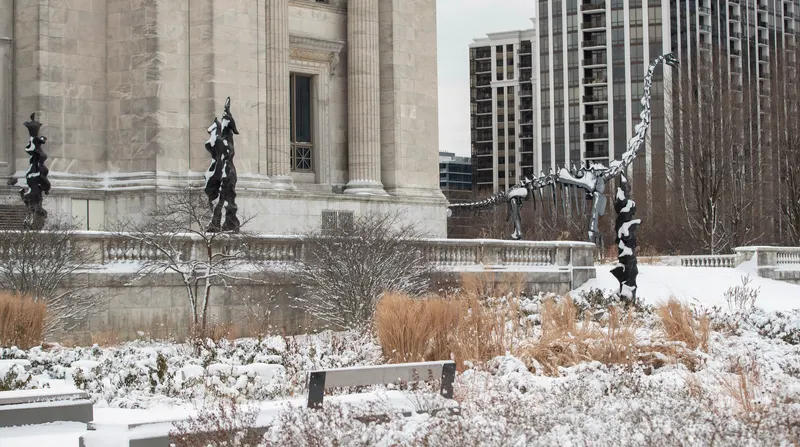
Through the Rice Native Gardens and the broader Master Plan, the Field Museum's grounds have become an active extension of its mission, demonstrating how thoughtful landscape design can advance sustainability, education, and ecological resilience at both campus and city scales.

Collaborators
ecology + vision
Ecological Consultant - Master Plan
TERRA Engineering
Civil Engineer
Awards
- 2023 Illinois ASLA Jensen Award
- 2017 Illinois ASLA Honor Award