Shaping Chicago’s riverfront future
Chicago River Design Guidelines
| Location | Chicago, Illinois |
| Client | City of Chicago Department of Planning and Development (DPD) |
| Expertise | Resilience & Sustainability, Master Planning & Visioning, Community Collaboration |
| Size | 27 miles |
| Completion | 2019 |
At the Intersection of Nature and Industry
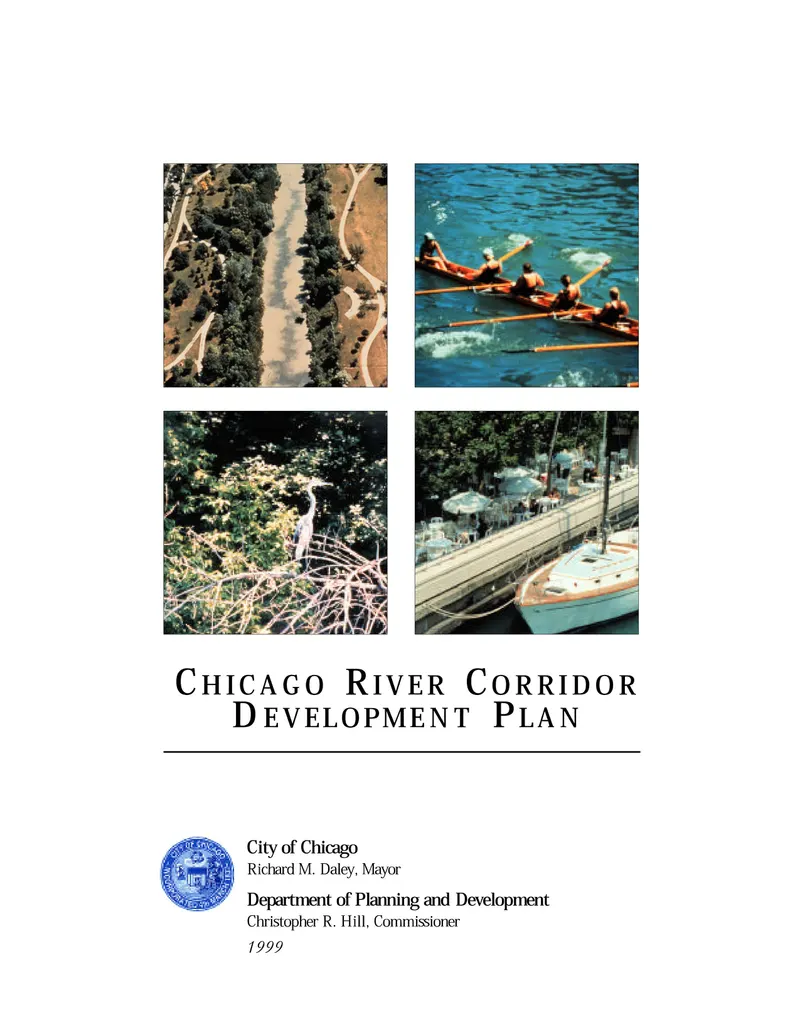
Since the adoption of the first Chicago River Corridor Plan in 1999, significant public and private investment has transformed previously underutilized riverfront areas. New residential and mixed-use developments have emerged along the river’s edge, water quality has improved, and the river has become an increasingly vibrant public destination. These changes, along with growing demand for accessible and well-designed riverfront amenities, created the need to update the guidelines guiding future development.
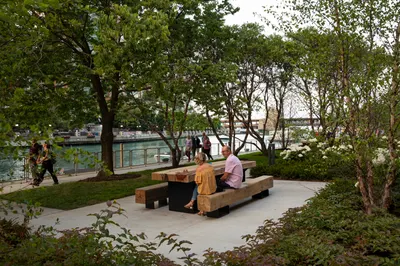
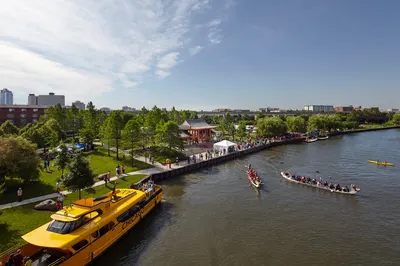
The Chicago River Design Guidelines establish a framework of goals, expectations, and requirements for development along the Chicago River and its branches within the city limits. The guidelines encourage new developments to embrace the river as a central asset, activating the riverfront while expanding opportunities for public access, recreation, and environmental stewardship. When thoughtfully integrated, riverfront development can provide additional open space, strengthen ecological systems, increase property values, promote economic vitality, and enhance Chicago’s identity as a world-class city.
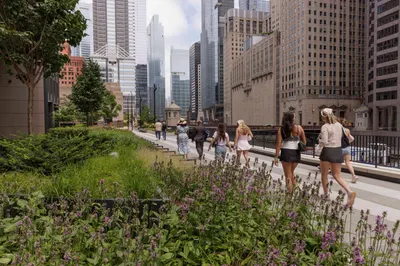
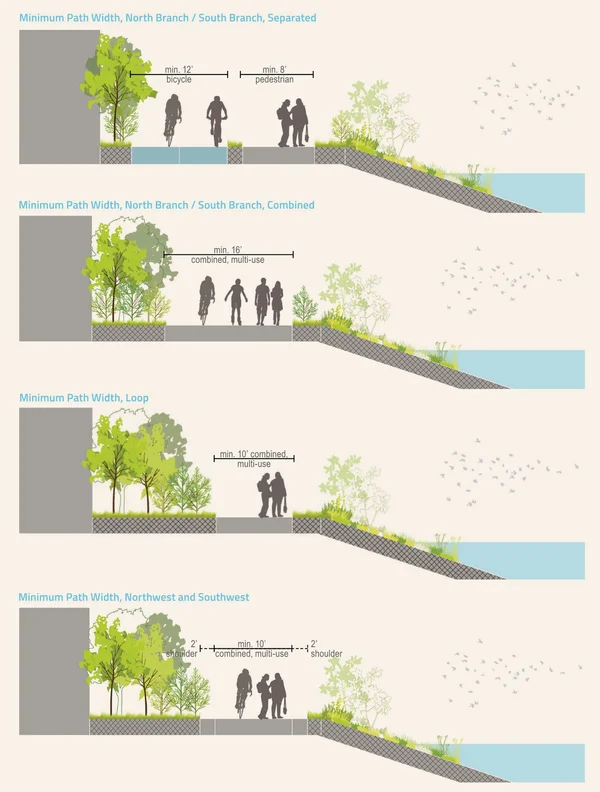
The guidelines organize potential improvements into three overarching categories: nature, recreation, and connectivity. They establish a clear framework for how development can contribute to the river corridor, as well as outline core requirements for riverfront projects, including minimum setbacks from the river, public access points, and a continuous multi-use path.
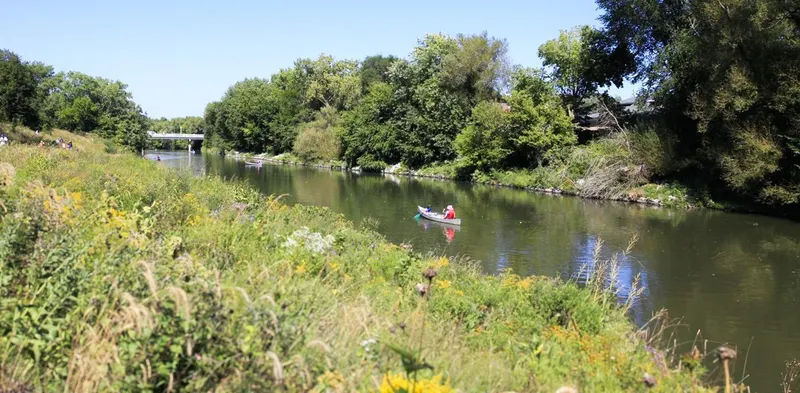
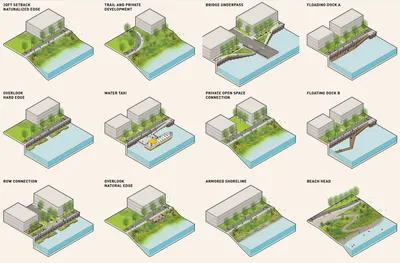
The document also provides strategies for riverbank treatments, including naturalized edges, sloped banks, and vertical bulkheads, ensuring that each segment of the river’s edge can be thoughtfully improved over time.
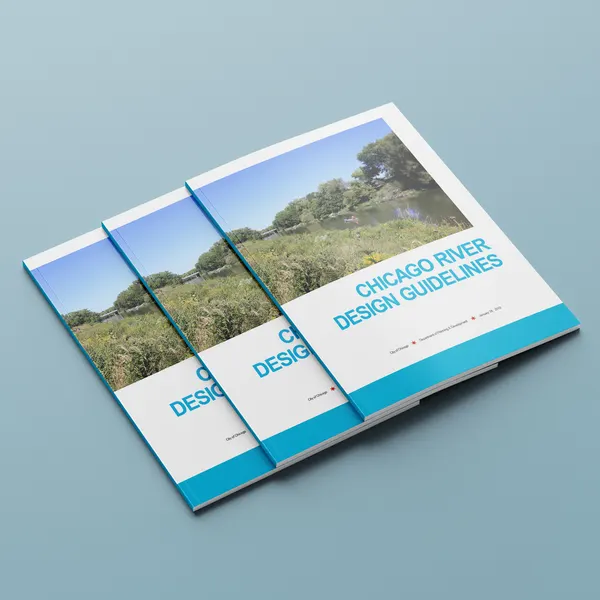
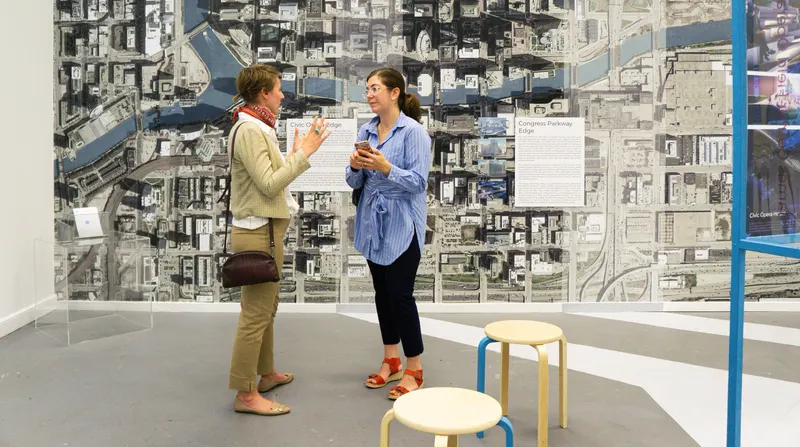
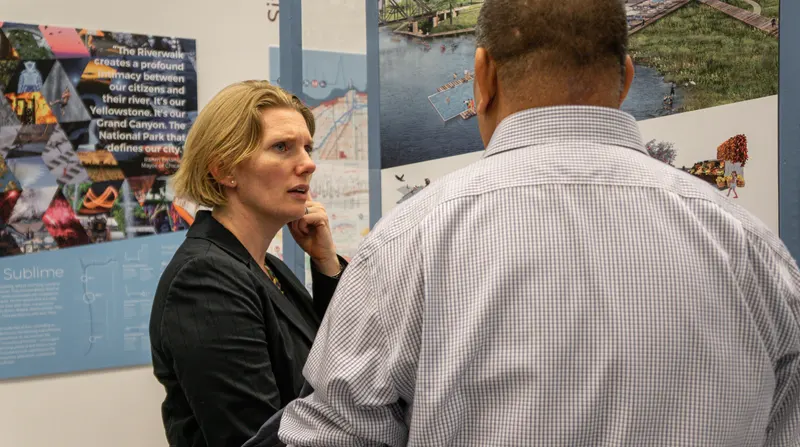
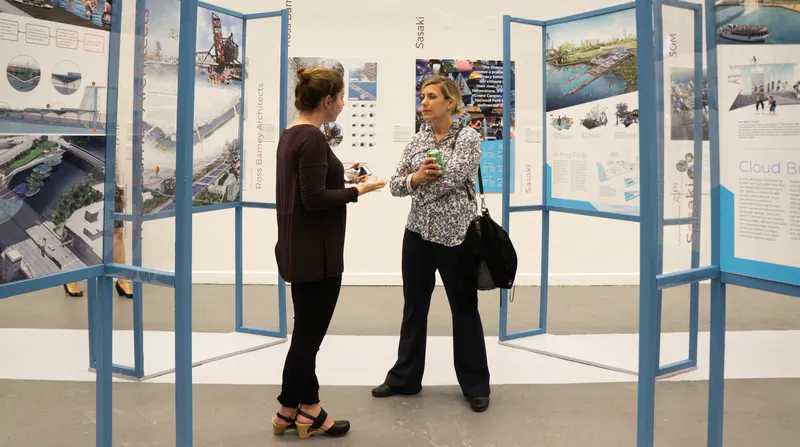
Input from a robust, multi-year public engagement process was incorporated directly into the guidelines in order to include as many voices as possible.
The input included five major sub-projects:
- River Edge Ideas Lab: more than 11,500 visitors to the main exhibit and 24,000 to the traveling exhibit
- North Branch Framework Plan: over 800 attendees at 12 public meetings
- Great Rivers Chicago: 3,800 survey respondents
- CDOT South Branch Implementation Plan: 25 stakeholder interviews
- River Implementation Committee: advisory committee comprised of community leaders, elected officials, business owners, residents, and key stakeholders to provide ongoing input
Three key themes emerged from public feedback and became the foundation of the Design Guidelines:
1. Creating a natural character along the river’s edge
2. Prioritizing recreation and public access
3. Using creative, consistent design elements to strengthen connections between the river and surrounding neighborhoods
In developing the design guidelines, Site Design Group partnered with Chicago-based branding agency Blue Daring to create a visual identity that connects the diverse places along the river and establishes a cohesive, inviting riverfront experience.
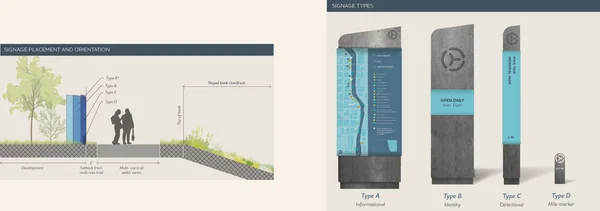
Designed in Collaboration with Blue Daring
Together, these strategies support a comprehensive approach to riverfront development that strengthens the Chicago River as a vital recreational, ecological, and civic resource.
Collaborators
Blue Daring
Branding Guidelines
Awards
- 2020 Illinois ASLA Honor Award Planning and Analysis