Cultivating Connection to the Land
| Location | La Porte, Indiana |
| Client | SEEK Design + Architecture / Private Client |
| Exptertise | Resilience & Sustainability, Horticulture & Arboriculture, Stewardship & Continuing Landscape Consulting |
| Size | 5 acres |
| Completion | 2025 |
The La Porte Farmstead in rural northwestern Indiana shows how residential landscapes can support climate action and resilience. Our vision was to create a quiet retreat that connects its inhabitants to seasonal change, wildlife, food production, and the ecological systems of the region while demonstrating the potential for private landowners to be stewards of the land.
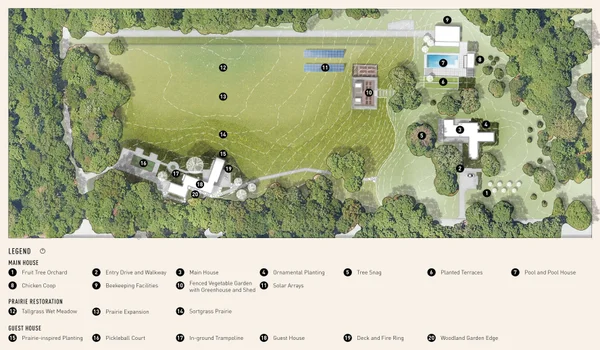
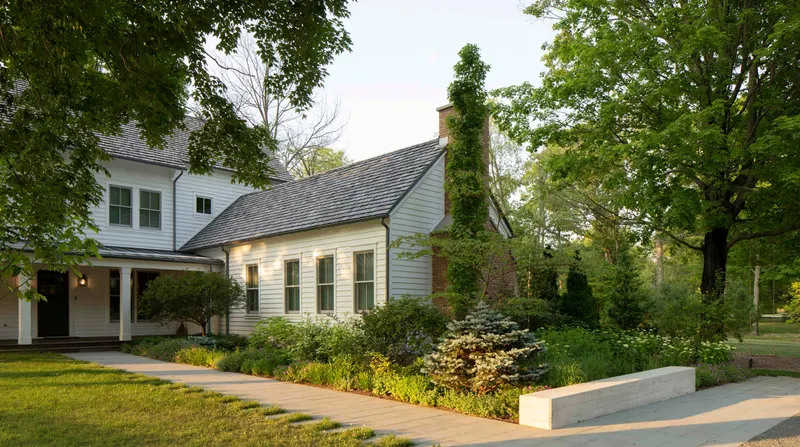
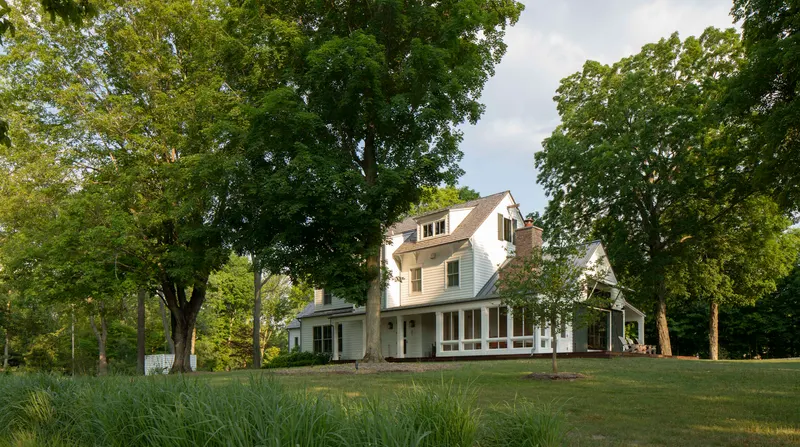
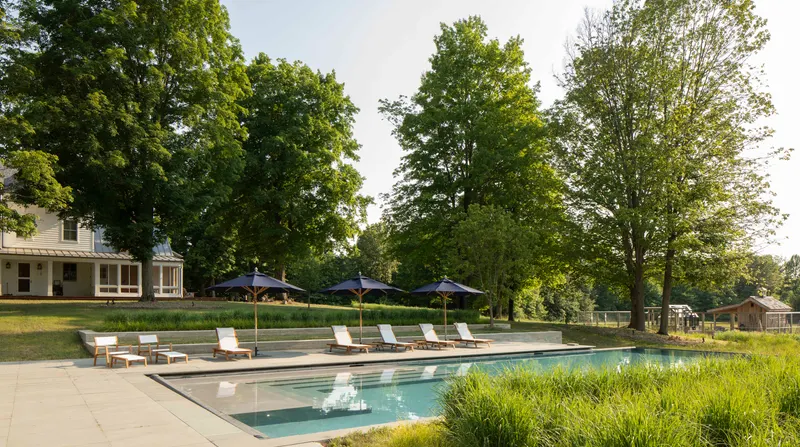
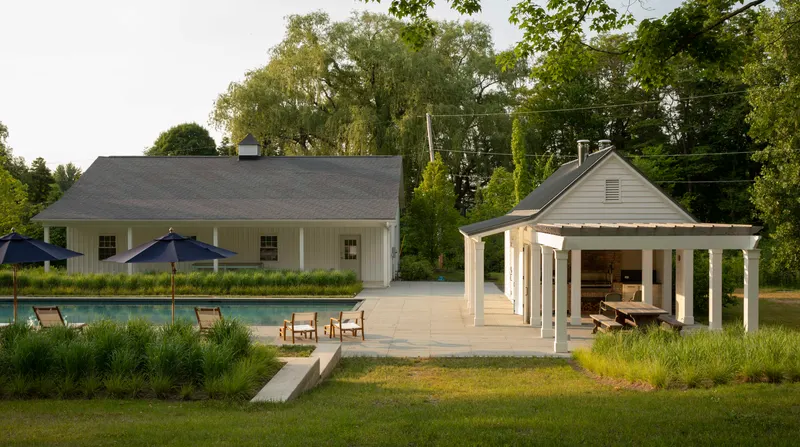
Completed in 2019, the first phase focused on the landscape surrounding the main residence. Layered native and ornamental plantings, terraced lawns, a pool and pool house, repurposed agricultural structures, and a bluestone drive with electric vehicle charging facilities create a series of connected outdoor spaces around the house.
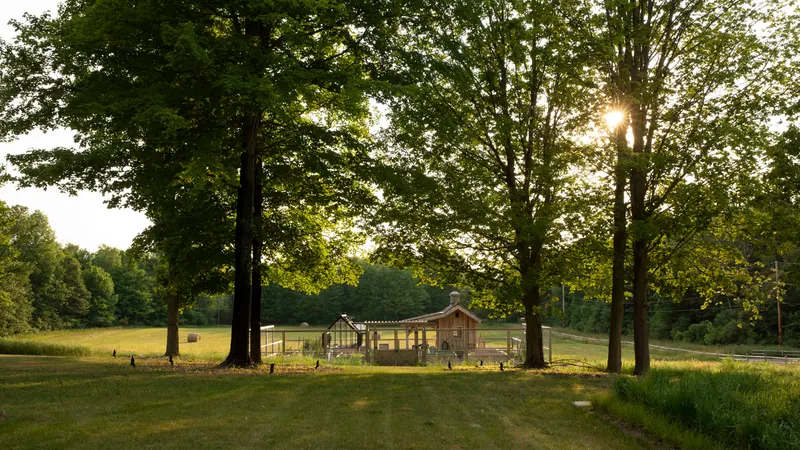
Tucked behind a maple grove, a hillside vegetable garden preserves long views across the surrounding fields. A greenhouse and small shed support the cultivation of vegetables, berries, and cut flowers, honoring the property’s agricultural heritage.
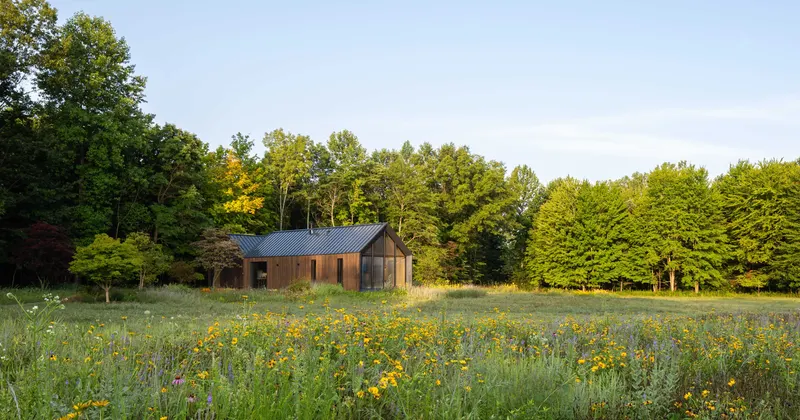
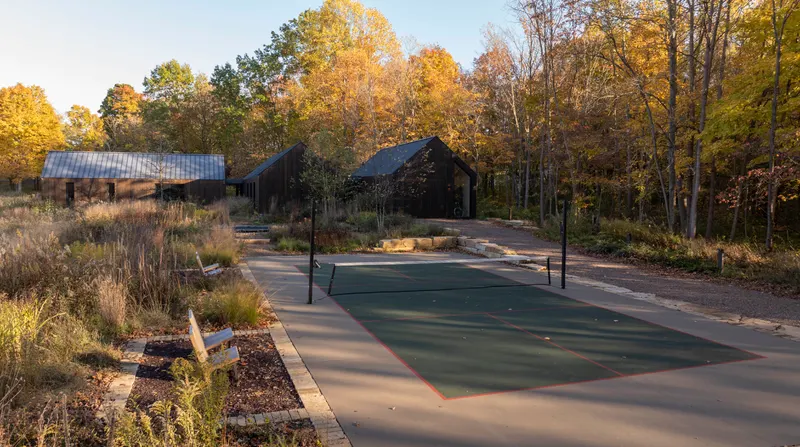
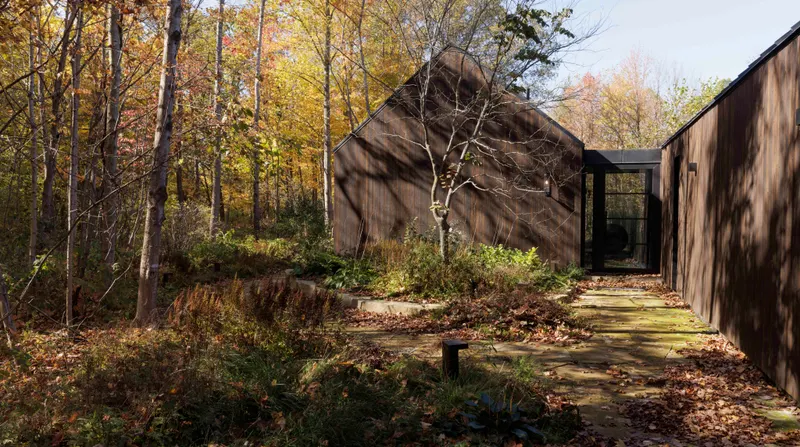
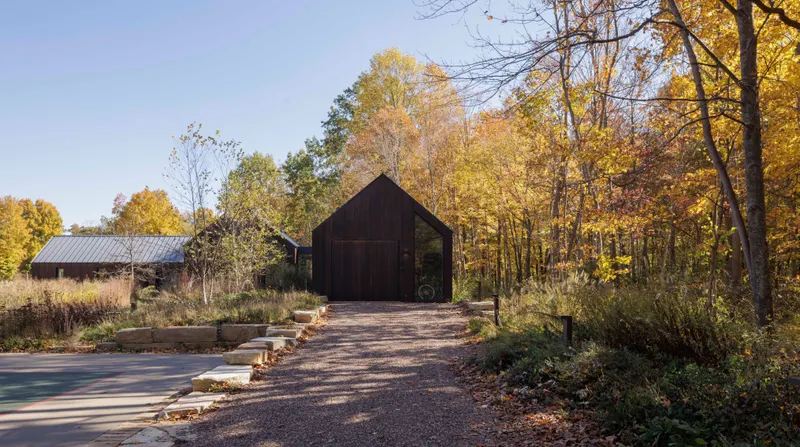
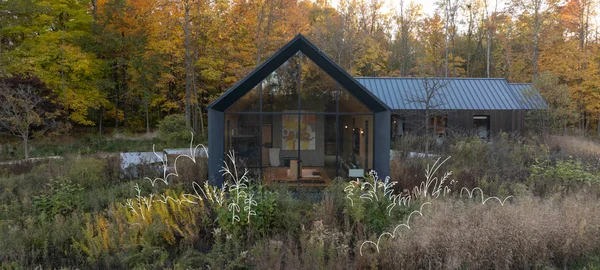
The second phase introduced a guest house along the southwestern woodland edge at the bottom of the hill, designed as an intimate retreat for family, friends, and wellness-focused gatherings.
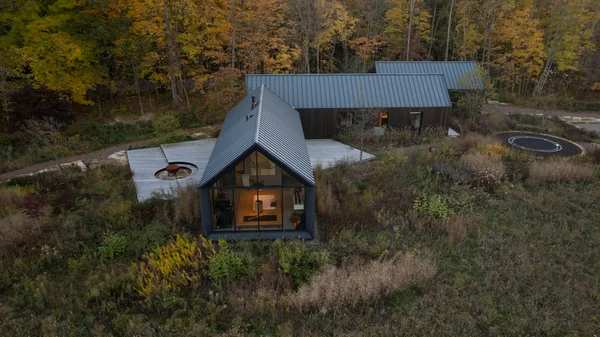
A combined pickleball and volleyball court, an in-ground trampoline, and a fire ring create spaces for recreation and togetherness. Sandstone pavers and aggregate pathways connect these elements while linking the guest house back to the main residence through the newly established prairie.
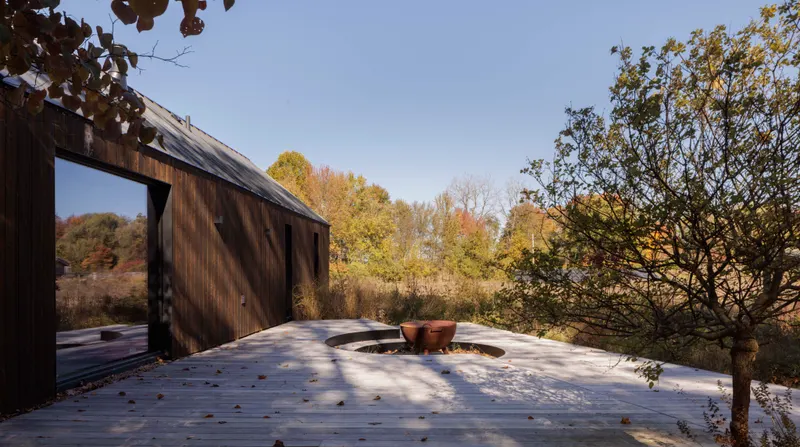
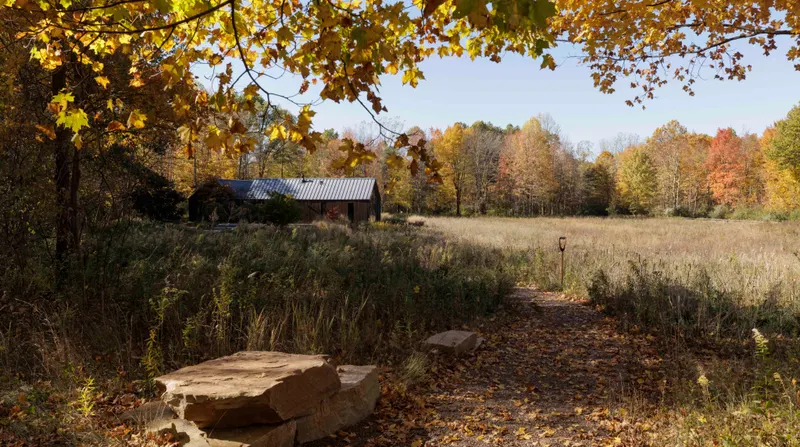
Carefully restoring 2.5 acres of former alfalfa field to biodiverse prairie and wet meadow required a commitment to protecting existing ecologies and tailoring planting to the site’s specific topography, hydrology, and soil conditions. Deep-rooted native plants have effectively minimized flooding by improving stormwater infiltration, reducing runoff, and strengthening soil health while also providing year-round texture, wildlife habitat, and seasonal variation.
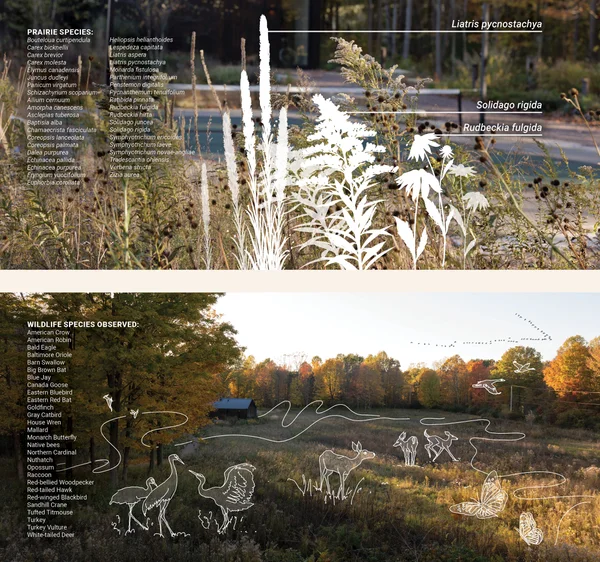
Together, the restored prairie and woodland edge strengthen the property’s resilience to fluctuating precipitation patterns and other climate-related stresses. This increase in biodiversity across the site shows that even small-scale interventions can meaningfully contribute to regional ecological health, restoring habitat in a landscape where native prairie has become increasingly rare.
Collaborators
SEEK Design + Architecture
Architecture
Pizzo & Associates
Habitat and Prairie Restoration
Awards
- 2026 2026 Illinois ASLA Presidential Award Residential Design
- 2025 2025 AIA Chicago Citation of Merit, Architecture XS
- 2025 Association of Licensed Architects Merit Awards