Climate Change at Street Level
The United Nations Environment Programme’s Emissions Gap Report 2026 warns that global warming is set to exceed 1.5°C (2.7°F) above pre-industrial levels, underscoring the urgency of reducing greenhouse gas emissions worldwide. For landscape architects and planners, it also raises the question: how can the places we design better support people in a warmer climate?
Through our work with the Chicago Department of Planning and Development on the Moving Archer Forward planning process, our team explored how heat, shade, and access to public spaces can impact the human experience at the street level, and what could be done to help encourage walking or lingering along the corridor.
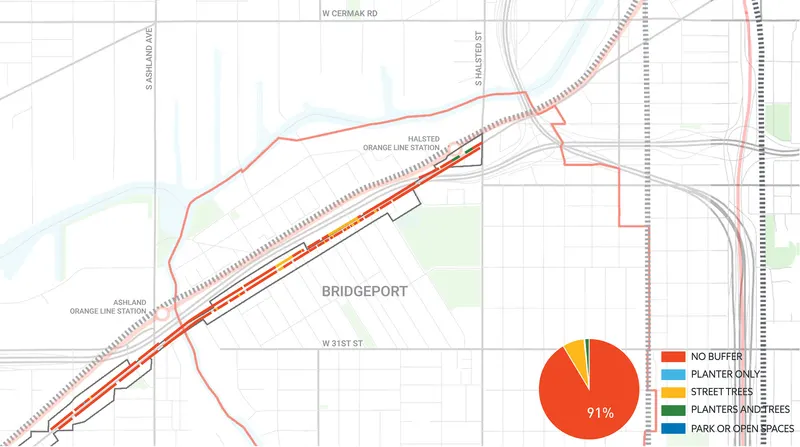
The study area included 6.5 miles of Archer Avenue, from Halsted Street to Cicero Avenue, through portions of Chicago’s Bridgeport, McKinley Park, Brighton Park, Archer Heights, and Garfield Ridge community areas. Site visits and reviews of street imagery showed long stretches of exposed sidewalk, few trees or planted buffers between pedestrians and traffic, and difficult crossings.
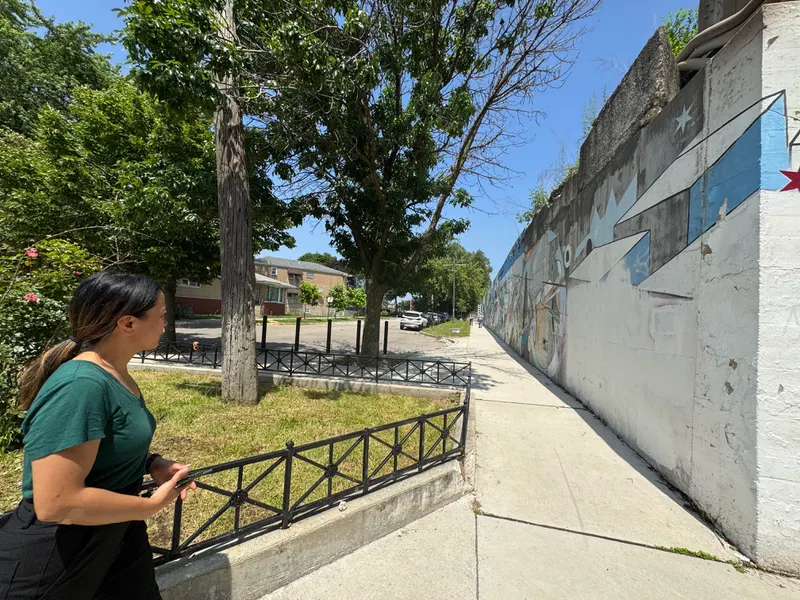
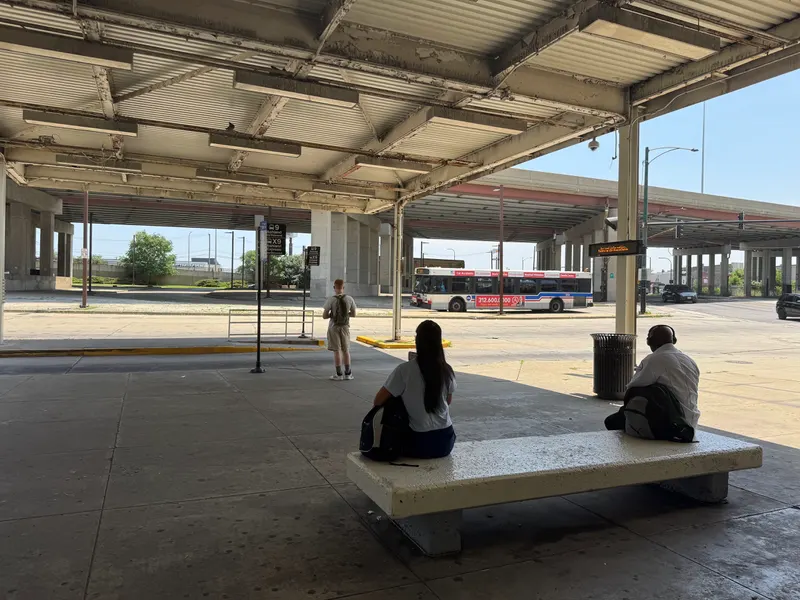
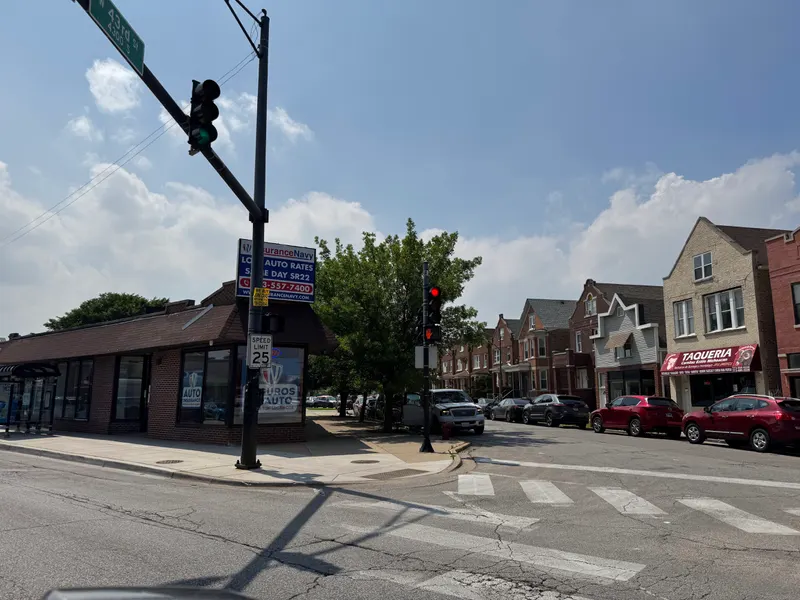
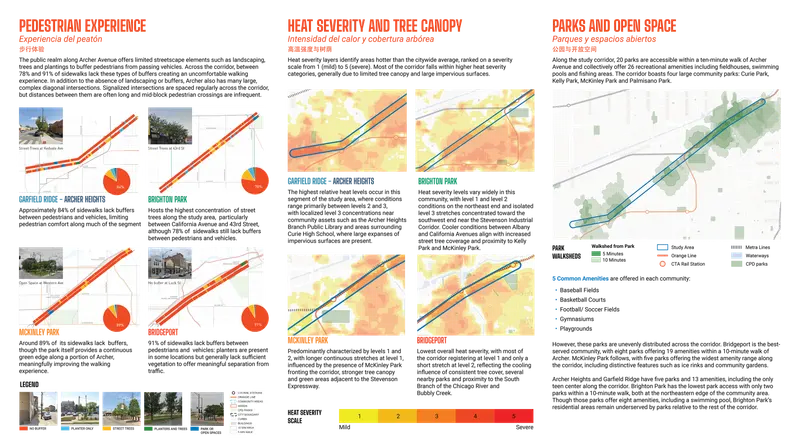
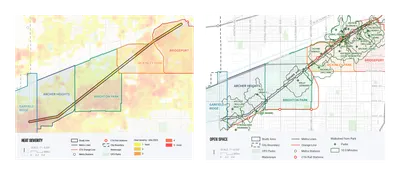
We compared the existing conditions with maps of heat severity and walking access to parks. Much of the corridor has limited tree canopy, extensive pavement, and temperatures above the citywide average. Although 20 parks are within a ten-minute walk of the study area, their uneven distribution leaves some stretches of Archer Avenue with fewer nearby places to find relief from the heat.
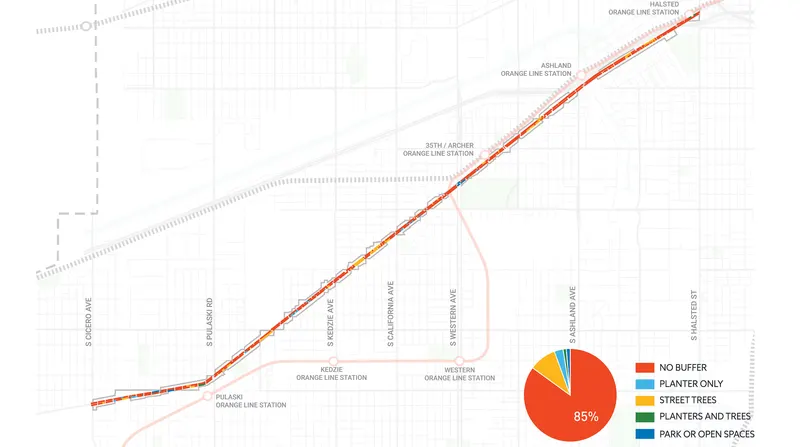
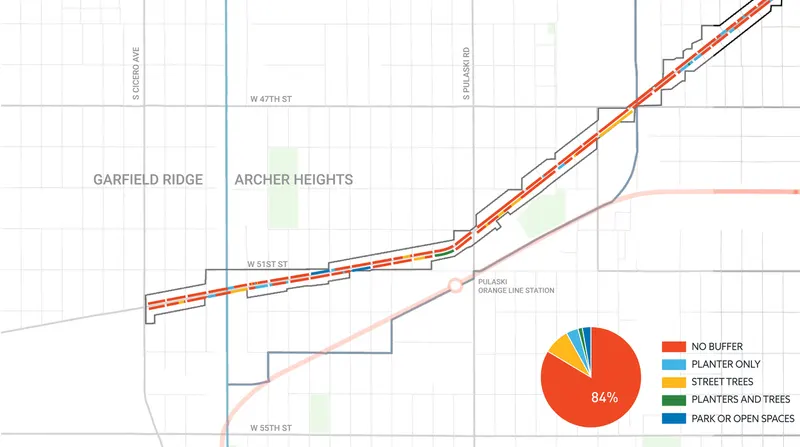
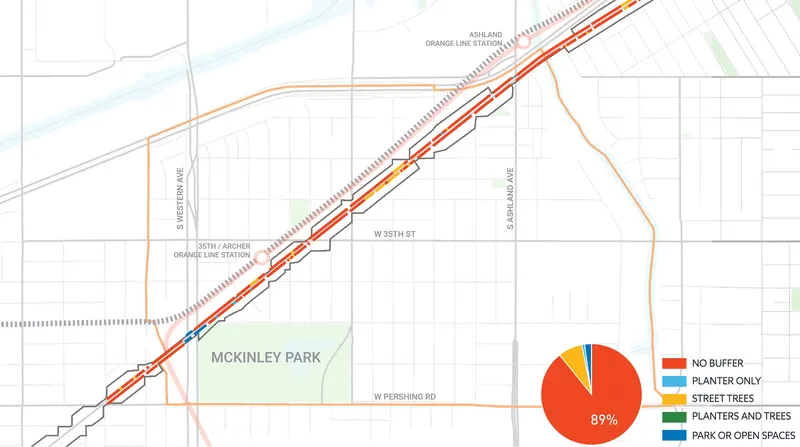
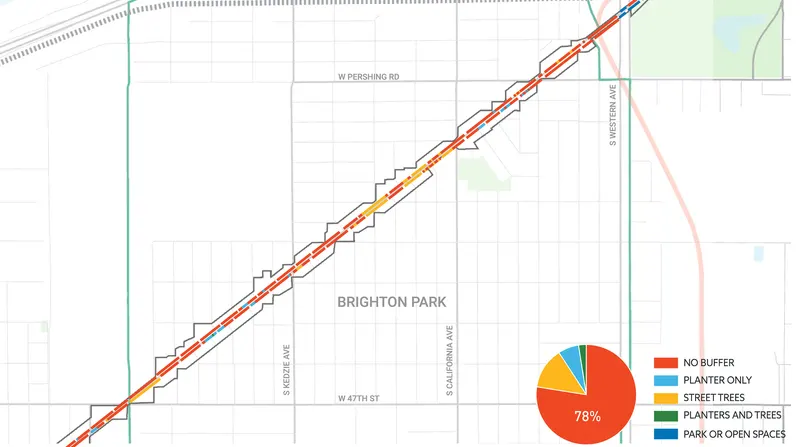
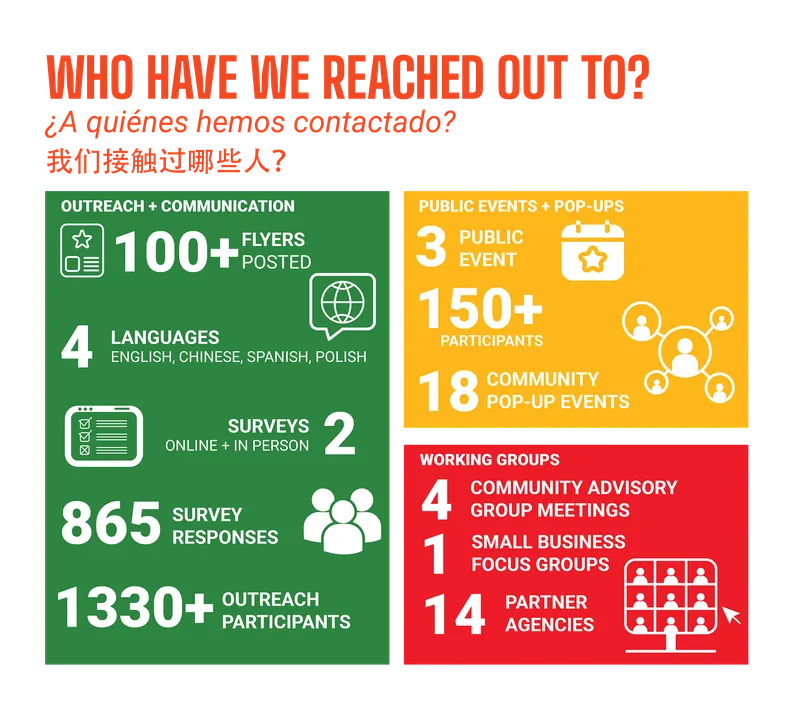
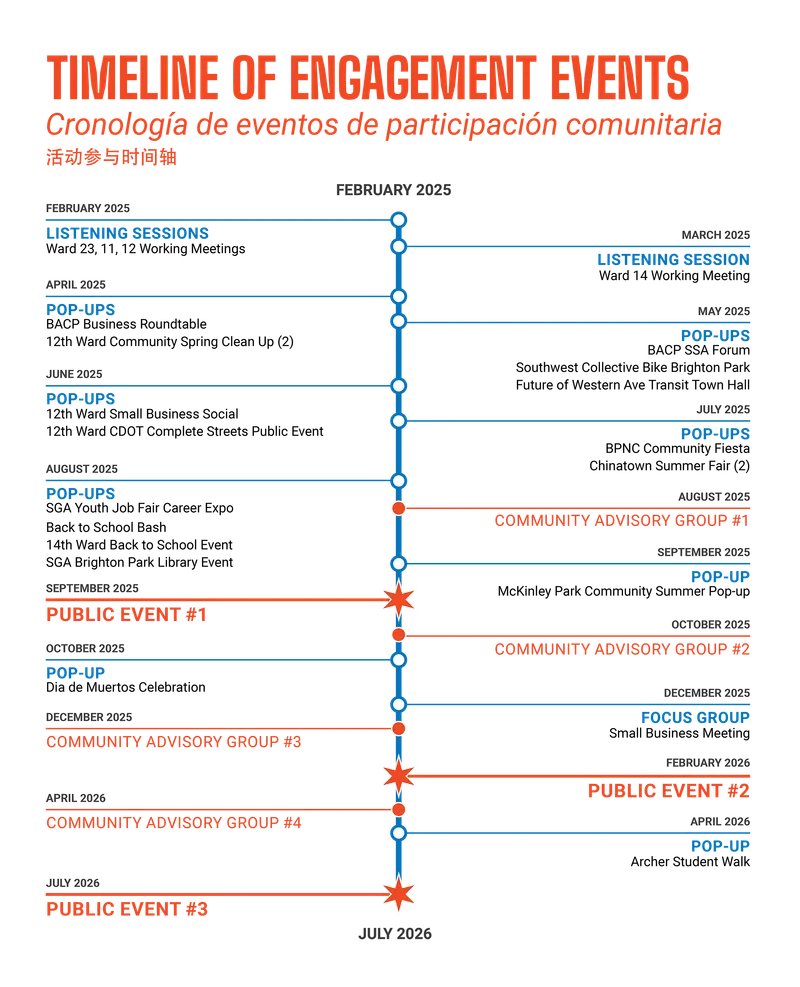
The planning process included a yearlong engagement process, seeking input from a Community Advisory Group, listening sessions with the public, community pop-up events, and stakeholder focus groups.
At our first public event in September 2025, residents described unwelcoming sidewalks and a need for safe, comfortable places where different generations could gather. Their feedback, combined with the analysis mapping, helped us see where higher temperatures, limited shade, and gaps in park access overlap, creating “hot spots” for undesirable micro-climate conditions – in other words, the areas most vulnerable to heat.
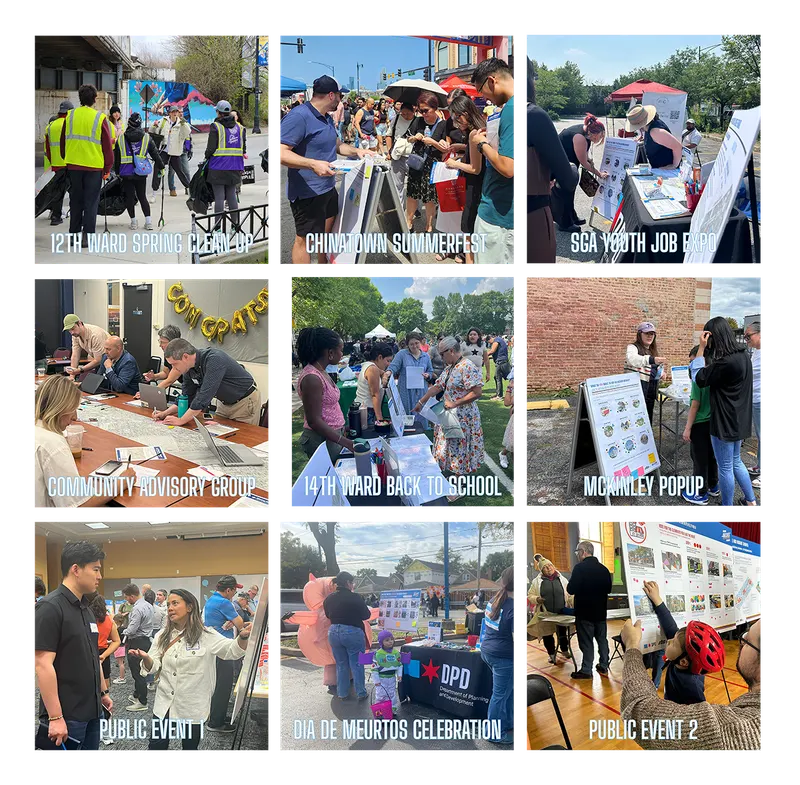
This feedback directly informed the final vision, which was centered on three key planning principles to guide future development along Archer Avenue:

Recommendations supporting these principles include a more equitable distribution of public spaces and reclaiming underused land for community gathering and ecological benefits. Shaded seating along business streets, small plazas, and new green spaces would give people more welcoming places to pause and gather. Green alleys and green roofs offer additional opportunities to manage stormwater and reduce urban heat buildup.
Together, these improvements would make daily life along Archer more comfortable while helping its neighborhoods prepare for a warmer climate.
The really simple thing, if you care about making people more comfortable, is just to offer more opportunities for shade.”
V. Kelly Turner, Associate Professor of Urban Planning and Geography, UCLA, quoted in National Geographic.
Archer is only one example of global efforts to plan for a warmer climate. A city-led project in Toronto developed guidelines for outdoor thermal comfort that consider shade, sunlight, wind, and future climate conditions. In Shade Phoenix, a citywide analysis of shade from trees and structures helped guide a plan to expand shade where people spend time outdoors. In the Shaded Politics study, MIT researchers mapped pedestrian shade across nine cities worldwide, examining how access varies between neighborhoods and income groups.
As climate change makes addressing urban heat more urgent, planning for shade is a very simple way to keep our public streets more comfortable for everyday life. Moving Archer Forward provides a starting point for directing investment where shade and welcoming public spaces are most needed. Our approach through this process of combining field observations, mapping, and community input, can provide a framework to help other communities identify their own priorities for a warmer future.
To read the full Moving Archer Forward vision, visit: chicago.gov.